
Vertical Platform Lifts
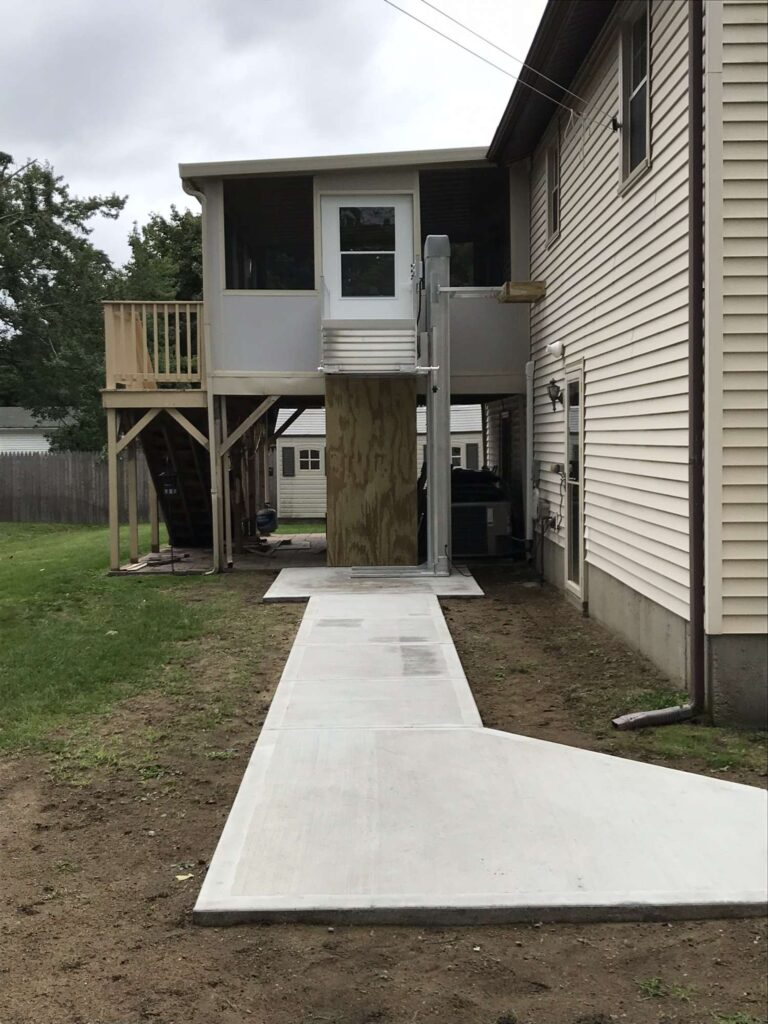
For individuals with mobility challenges who rely on wheelchairs, installing a vertical platform lift can provide access to homes that might otherwise be difficult to enter. These lifts are often placed outdoors or in a garage. The user just needs to roll onto the platform, press a button, ascend to the doorway level, and then roll off.
Accessibility Options
Although aluminum ramps and stairlifts are typically ideal for most homes, there are situations where vertical platform lifts offer a better alternative—especially when ramps or stairlifts are impractical due to specific needs or unique home layouts. Such cases may include:
When there isn’t sufficient room to install an aluminum modular ramp, which typically requires about 20 linear feet to accommodate 3-4 steps at a standard home entry.
When the person using the wheelchair cannot propel themselves up the ramp, and a caregiver cannot safely assist them in pushing the wheelchair, regardless of how gentle the incline is.
When the individual cannot safely or comfortably transfer on and off a stair lift chair.
Accessibility Options
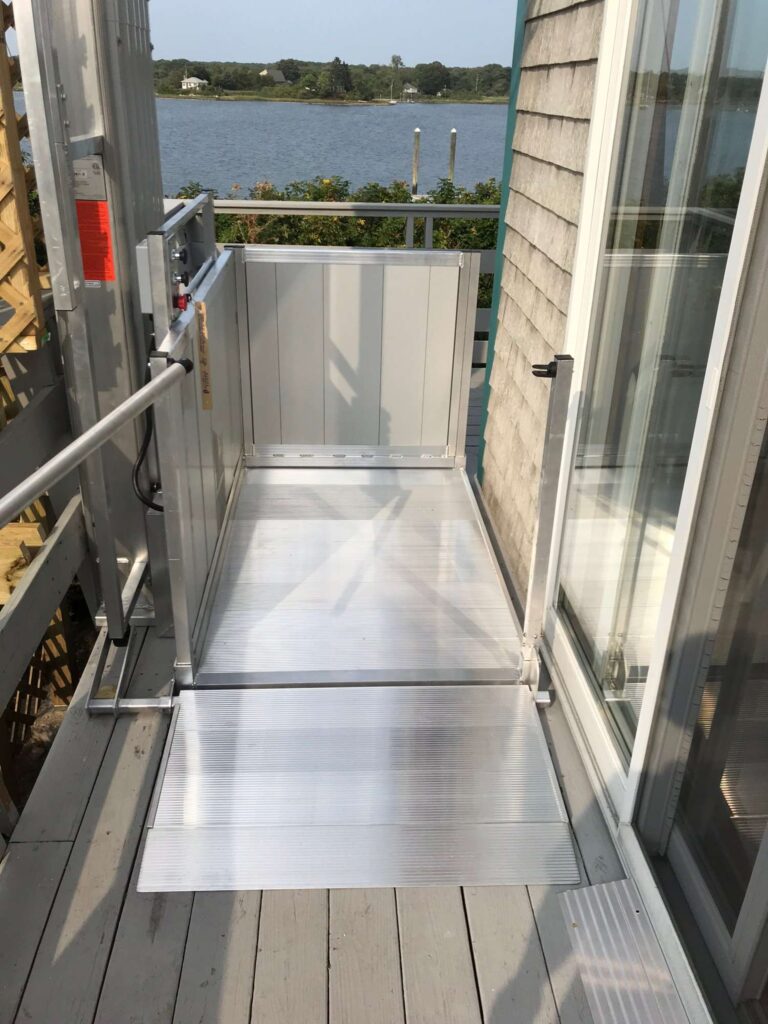
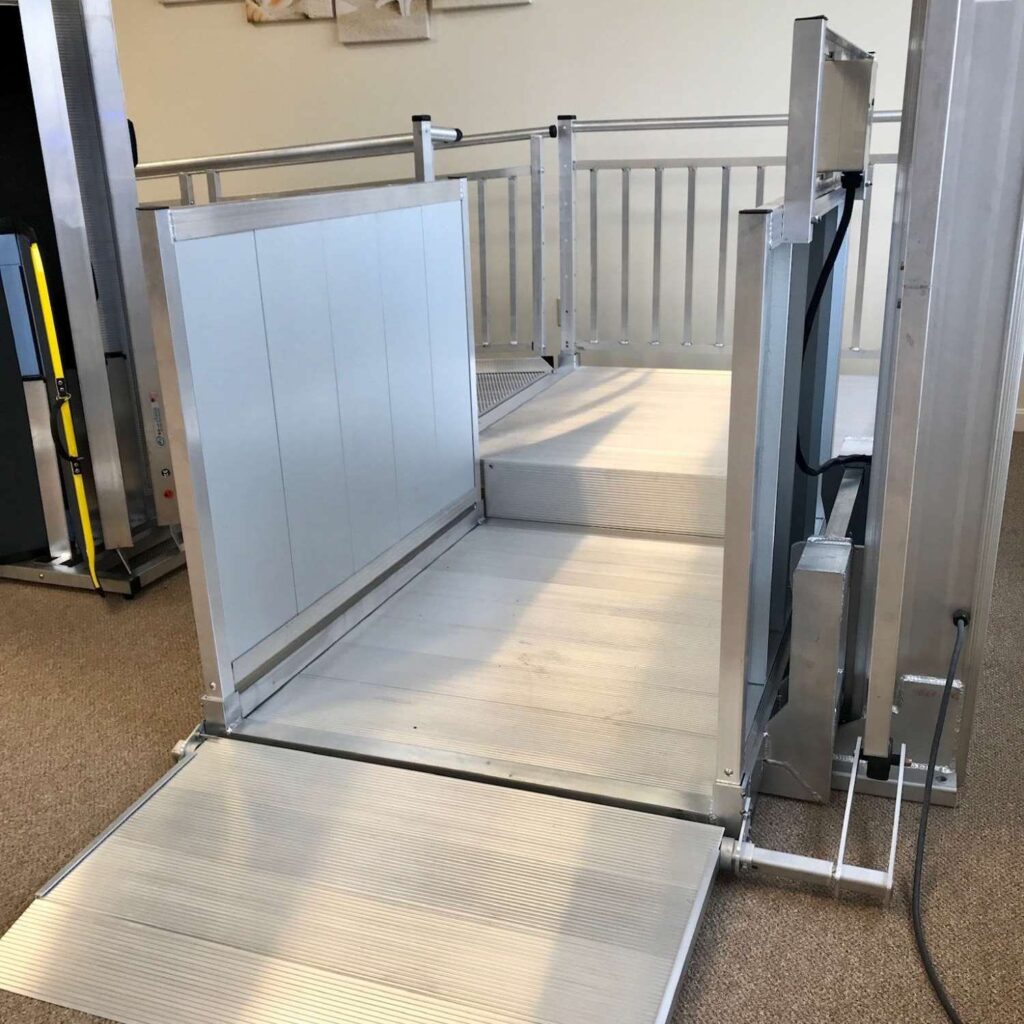
To keep users secure while the platform moves up or down, the short access ramp folds upward, creating a protective barrier that prevents rolling off during operation. Standard vertical platform lifts typically offer up to 6 feet of travel, while specially ordered models can extend up to 14 feet. The lift includes a control panel equipped with an emergency stop button and a key switch that controls power—ensuring the lift only operates when authorized, which helps prevent misuse by children or unauthorized individuals.
Several safety features are built in to reduce the risk of injury. For example, a safety pan located beneath the lift automatically halts movement if it comes into contact with an obstacle, protecting children, pets, or objects from being trapped under the lift as it descends.
Additionally, installing a self-closing and latching gate to cover any open edges on the porch can further enhance safety by preventing accidental falls.
All Weather Unit
These lifts are designed to operate in all types of weather. However, in Southwest Michigan, snow accumulation beneath the lift can become a problem if the platform is left in the raised position. Snow may pile up under the platform, triggering the safety mechanism and preventing the lift from lowering. The solution is simple: lower the platform to avoid snow buildup.
Additionally, installing call and send switches at both the top and bottom of the lift can be very useful, especially when two different people use the lift or during harsh weather conditions.
Permit or Construction Considerations
A concrete pad, at least 4 inches deep, is required as the base for the lift. Installing the lift in a garage is often ideal since the concrete floor is already in place. Depending on local regulations, a permit may be necessary. The pad should measure around 5 feet by 8 feet to adequately support the lift and ensure a smooth surface for wheelchair access. Including a slight slope in the pad’s design helps prevent water from pooling—an important consideration in winter months, as freezing water can interfere with the lift’s function by causing the platform to shift.